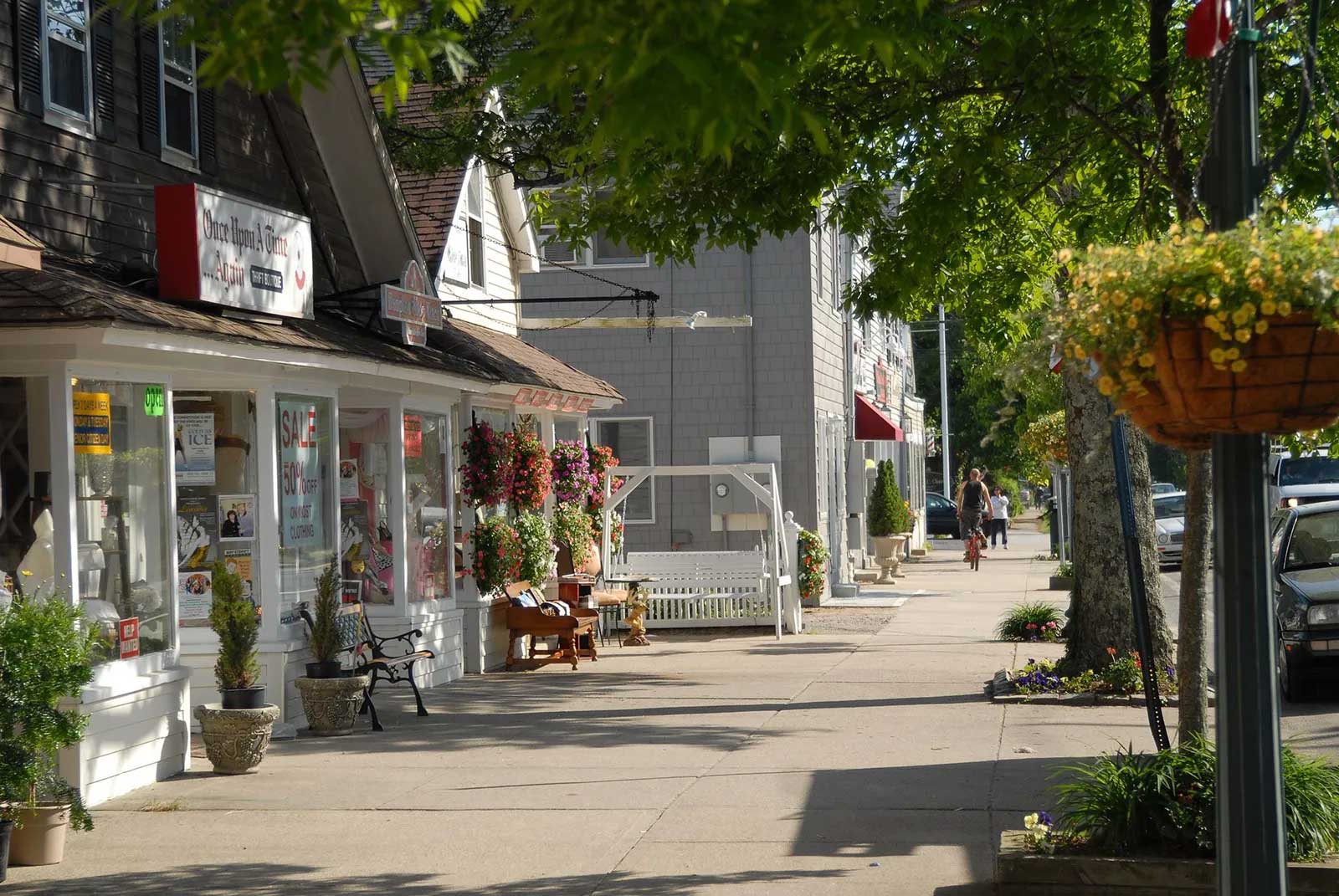
Water Mill's Montauk Highway frontage looks like a commercial corridor from the road — farm stands, small galleries, a handful of retail storefronts — and named for the historic grist mill that still marks the hamlet's center. Whether that visible retail counts as real replacement-grade income property is a separate question.
The hamlet sits between Southampton and Bridgehampton, and a lot of what looks like Water Mill's own commercial base is really a thin ribbon of frontage that reads busier than the actual number of income-producing parcels behind it. Visibility from the road isn't the same thing as depth of inventory.
Farm Stands and Storefronts, Not Stabilized Leases
Much of Water Mill's roadside retail is small, owner-operated, and running on short-term or seasonal leases rather than the kind of multi-year stabilized lease structure an underwriter wants to see in replacement property. Farm stands in particular often operate seasonally with informal arrangements that don't translate cleanly into an income-producing asset for exchange purposes.
Any purchase in Water Mill also carries the Town of Southampton's 2% Community Preservation Fund transfer tax on the buyer's side, whether the property is a roadside retail building or agricultural land adjacent to the hamlet's working farms. That's a real acquisition cost that belongs in the underwriting alongside lease quality, not a detail to discover at the closing table.
Where the Rent Roll Needs More Scrutiny Than It Gets
A broker handing over a rent roll for a Water Mill storefront property should expect real diligence before that roll gets treated as reliable income for underwriting. Lease term, renewal history, and whether tenants are month-to-month or under multi-year agreements all change how a lender or a cash buyer values the same building. A generic proposal that takes the rent roll at face value is skipping the step that actually protects the exchange.
Income figures from a farm stand or seasonal gallery lease also need a full-year adjustment before they're used to satisfy the exchange's replacement-value comparison. A tenant paying rent from May through September isn't producing a stabilized twelve-month income stream, and annualizing that summer number without adjustment overstates what the property is actually worth as an income asset.
What Realistically Qualifies
The candidate set worth identifying in and around Water Mill typically includes:
- retail or gallery buildings with documented multi-year leases
- rental homes with established rental history
- agricultural land adjacent to Water Mill's working farms
- small commercial buildings closer to Southampton village
Agricultural parcels near the hamlet's working farms sometimes carry purchased development-rights easements that cap non-farm use, similar to the restrictions seen further east in Sagaponack. That kind of land can be a genuine replacement for an owner exiting other restricted agricultural acreage, but it isn't a like-kind match for an unrestricted commercial parcel, and the two shouldn't be treated as interchangeable on an identification list.
Leaning on Southampton's Deeper Stock
Because Water Mill sits close to Southampton village, some of the more stabilized commercial candidates for a Water Mill exchange actually come from just over the line. That's not a failure of the local search — it's an honest acknowledgment that the deeper, more stabilized commercial base is a short distance away, and the identification list should reflect that rather than forcing a match inside Water Mill that doesn't hold up under diligence.
The qualified intermediary and the client's tax advisor should document why a candidate outside Water Mill was included, tying it back to the specific gap in local stock rather than leaving it as an unexplained jump to a neighboring village. That written reasoning matters if the identification is ever reviewed after the fact.
Common 1031 Exchange Questions
Does farm stand or seasonal retail property qualify as 1031 replacement property?
It can, if it's genuinely held for investment and produces documented income, but seasonal or informal arrangements need more careful review than a standard multi-year commercial lease before they're relied on. An oral or handshake arrangement with a farm-stand operator, for example, needs to be documented in writing before it can support an exchange valuation.
Why does a Water Mill rent roll need extra diligence?
Because much of the visible retail along Montauk Highway runs on short-term or owner-operated leases rather than stabilized multi-year agreements, and lease term directly affects how the property should be valued for exchange purposes. A rent roll pulled straight from an owner's memory, without lease documents to back it up, isn't something a lender or a careful buyer should rely on.
Is Southampton village a common source of replacement property for Water Mill sellers?
Yes, given its proximity and deeper commercial stock, Southampton village often supplies more stabilized candidates than Water Mill's own retail corridor. The short distance between the two makes that expansion an easy, well-documented step rather than a stretch.
What kind of property is realistically available in Water Mill itself?
Rental homes with established history, agricultural land, and a limited number of retail or gallery buildings with real multi-year leases are the more realistic local candidates.
Does agricultural land near Water Mill come with use restrictions?
Some parcels carry purchased development-rights easements that permanently cap non-farm use, similar to restrictions seen elsewhere on the South Fork, and that limitation should be reviewed with a tax advisor before the land is treated as a like-kind match for an unrestricted commercial parcel.