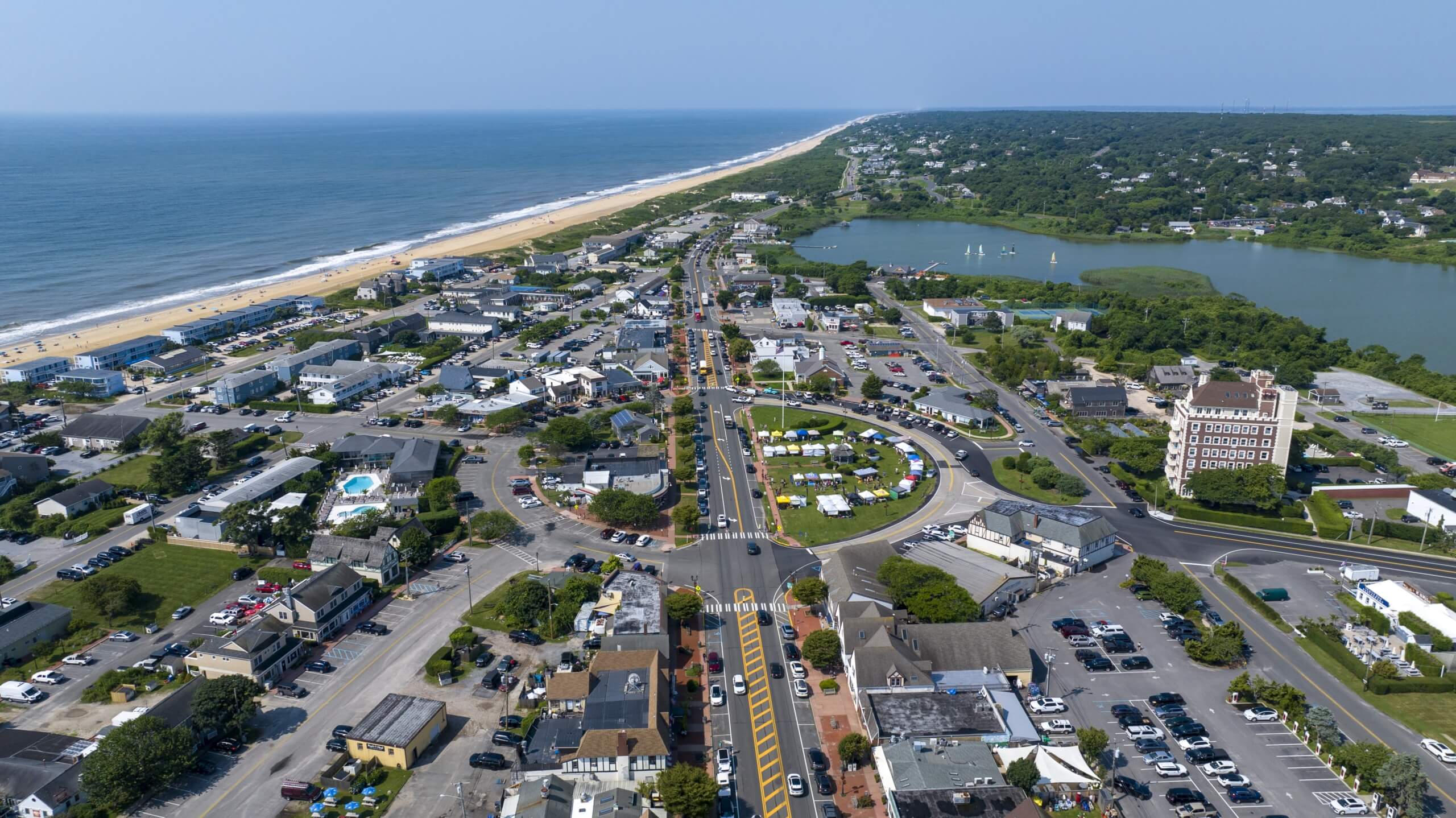
Sag Harbor is one of the few Hamptons hamlets with an actual working downtown — a historic whaling village with mixed-use buildings along Main Street and the wharf, alongside the seasonal rental housing that dominates most of the East End. That gives sellers here real commercial and mixed-use replacement options, but it also brings coordination problems a generic quote won't flag.
One Village, Two Towns
Sag Harbor's incorporated village line crosses both the Town of Southampton and the Town of East Hampton. A relinquished or replacement property just blocks apart can sit under different town assessment and permitting authority. That split doesn't change the federal exchange mechanics, but it changes which town office an advisor needs to call for zoning confirmation, tax history, or a certificate of occupancy — and a coordinator unfamiliar with the village can waste real time figuring that out mid-exchange.
One piece of that split is at least consistent: both Southampton and East Hampton are Peconic Bay region towns, so the 2% Community Preservation Fund transfer tax applies to a buyer no matter which side of the village line the property falls on. That's one less variable to sort out, even with two separate town halls otherwise in play.
Real Mixed-Use Stock, Real Diligence
Main Street and the wharf area include storefronts with apartments or offices above them, marina-adjacent commercial parcels, and a scattering of small multifamily buildings — the kind of stock that actually works as replacement property for an owner exiting a similar asset elsewhere. The candidates worth identifying include:
- mixed-use storefront buildings with residential units above
- small multifamily buildings near the village core
- marina and harbor-adjacent commercial parcels
- historic district buildings with existing certificates of occupancy
Downtown Sag Harbor also sits on a municipal sewer connection rather than the septic systems most East End hamlets rely on, which removes one layer of diligence that complicates waterfront deals elsewhere on the South Fork. That doesn't eliminate diligence altogether — harbor-adjacent parcels still need a title and flood-zone review — but it does mean a buyer isn't budgeting for a septic upgrade on top of everything else a downtown storefront building already requires.
What the Historic District Adds to the Clock
Sag Harbor's historic district review board has real authority over exterior changes, and that review can add weeks to any improvement exchange or reverse exchange that depends on renovation work closing out inside the 180-day window. A quote that treats an improvement exchange here the same as one in a hamlet with no design review board is setting the client up for a deadline problem that isn't the exchange's fault — it's a permitting timeline nobody priced in.
The review board's scope covers roofline, window, and facade changes on buildings within the historic district, which includes most of Main Street and the wharf. A renovation plan that looks routine on paper can still need a hearing date, and hearing dates on a village board's calendar don't bend for a 1031 deadline. An advisor who's actually worked Sag Harbor builds in a buffer for that hearing before committing to an improvement-exchange timeline, rather than assuming the permit will clear on the first submission.
Coordinating the File Across Both Towns
Because Sag Harbor spans two town jurisdictions, the qualified intermediary, the client's CPA, and the closing attorney should confirm early which town each specific parcel falls under, and build any historic-district review time into the closing calendar rather than discovering it after identification is locked. That coordination step is the difference between a village with real commercial inventory working in the client's favor and a scope surprise eating into the exchange period.
Income underwriting on a marina-adjacent or wharf-area property also needs a seasonal lens. Boat slip revenue and harbor-related retail traffic both spike from late spring through early fall, and a rent roll built on that stretch alone will read stronger than the property's actual twelve-month performance. Any comparison against a stabilized inland asset should adjust for that seasonality before it's used to satisfy the exchange's replacement-value test.
Common 1031 Exchange Questions
Does the Southampton/East Hampton town line affect the exchange itself?
Not the federal 1031 mechanics, but it does affect which town's zoning and assessment office an advisor needs to work with for a specific parcel, so it's worth confirming early rather than assuming.
Can historic district review delay a 180-day closing?
It can, especially for improvement or reverse exchanges that depend on renovation work being approved and completed. Building that review time into the schedule up front avoids a last-minute scramble.
Is Sag Harbor a good source of commercial replacement property?
It has more genuine mixed-use and small commercial stock than most Hamptons hamlets, but that inventory is still limited in absolute numbers, so it shouldn't be treated as a deep market.
What should a Sag Harbor engagement letter specify that others skip?
Which town each candidate property sits in, and whether historic district approval applies, since both affect the realistic closing timeline more than a generic template accounts for.
Does harbor and marina proximity change how a property is valued for exchange purposes?
Marina-adjacent parcels can carry different use restrictions and income patterns than inland commercial buildings, so they need their own comparable analysis rather than being priced off a generic Main Street comp.