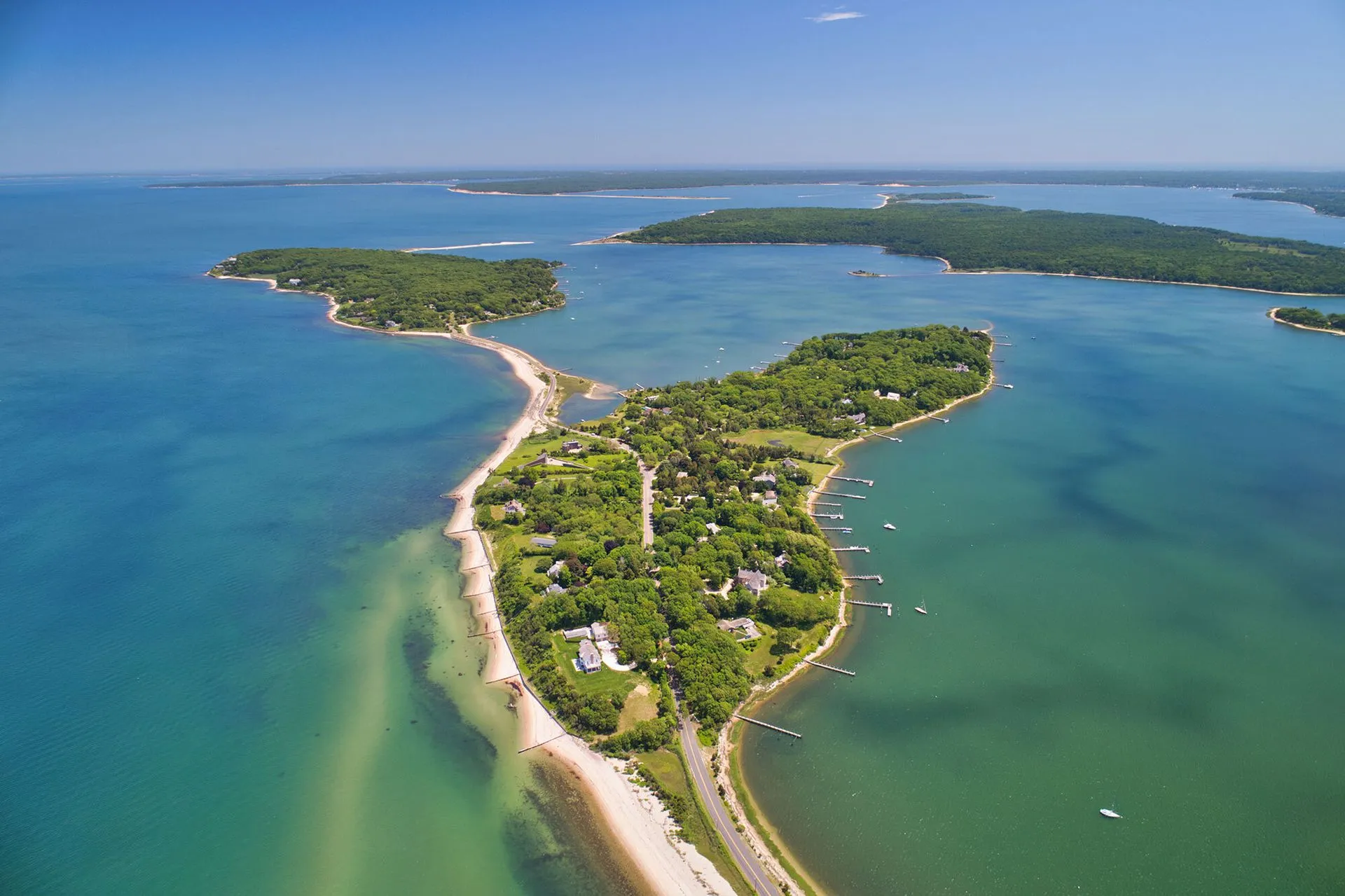
Wainscott is small — a narrow hamlet between East Hampton and Bridgehampton — but it holds something almost no other South Fork hamlet has: an actual light-industrial and commercial zone near the airport, alongside some of the highest residential land values on the East End near Georgica Pond.
That combination makes Wainscott an unusual comp problem. Two properties a mile apart can belong to entirely different asset classes and price tiers, and an advisor quoting the exchange needs to know from the first conversation which of those two worlds the relinquished or replacement property actually sits in.
A Commercial Zone in a Residential Hamlet
The Wainscott Commercial Center, near East Hampton Airport, holds contractor yards, light-industrial parcels, and small commercial buildings that serve the wider South Fork construction and service economy. It's a real, functioning commercial pocket — but it's also small, with a limited number of distinct parcels that rarely change hands.
Airport proximity cuts both ways for this stock. It supports demand from the trades and service businesses that work across the whole South Fork, but it can also mean noise and flight-path considerations factor into a lender's or an appraiser's view of a specific parcel, particularly one closer to the runway approach than others in the zone.
Where the Marketing Overstates It
Because Wainscott has that one commercial-industrial node, some proposals present it as if there's meaningful ongoing turnover in that stock. There usually isn't. A handful of parcels doesn't make an active market, and a sale in that zone might happen once every few years rather than on any predictable schedule. Treating it as a reliable source of on-demand replacement inventory sets an unrealistic expectation before the identification clock even starts.
Every purchase in Wainscott, whether it's a light-industrial parcel near the airport or a residential estate near Georgica Pond, also falls under the Town of East Hampton's 2% Community Preservation Fund transfer tax on the buyer's side. Given how high per-acre values run near the pond, that tax can represent a meaningful sum that needs to be underwritten into the deal from the outset, not treated as a minor closing-cost line item.
The Realistic Candidate Set
For a Wainscott-area exchange, the properties worth naming typically include:
- contractor yard or light-industrial parcels near the airport
- small commercial buildings in the Wainscott Commercial Center
- high-value residential rental property near Georgica Pond
- backup candidates in neighboring East Hampton or Bridgehampton
Parcels near Georgica Pond also sit close enough to freshwater wetlands to fall under town or DEC review before a structure is rebuilt or substantially expanded, which can add real time to an improvement exchange that depends on renovation work closing out inside the 180-day window. That review timeline should be confirmed early rather than assumed away because the property is residential rather than commercial.
Building In the Backup Path
Given how rarely the local commercial parcels turn over, the identification list under the three-property or 200% rule should include backups from East Hampton or Bridgehampton from the outset, with the qualified intermediary and tax advisor documenting why the search extended past Wainscott's own commercial zone. That documentation is the difference between a defensible identification and a list that looks improvised after the fact.
An owner exiting a light-industrial parcel and one exiting a high-value residential rental near Georgica Pond are effectively running two different searches, even though both start from the same small hamlet. Keeping the two candidate pools separate, rather than blending contractor-yard comps with pond-adjacent estate comps, keeps the identification list grounded in what each relinquished property is actually worth.
Common 1031 Exchange Questions
Is Wainscott a reliable source of commercial replacement property?
There's a real light-industrial and commercial zone near the airport, but it has few parcels and infrequent turnover, so it shouldn't be counted on as an on-demand source of replacement inventory. A search that treats it as a deep market usually ends up disappointed.
Why is Wainscott land so expensive despite its small commercial footprint?
High-value residential demand near Georgica Pond drives much of Wainscott's land pricing, separate from the smaller commercial-industrial zone near the airport. The two markets sit within the same hamlet but shouldn't be priced off each other.
Should a Wainscott identification list include properties in other hamlets?
Usually yes, since the local commercial stock is too limited to rely on alone; East Hampton and Bridgehampton typically provide the realistic backup candidates. That's true whether the exchange is trading out of a light-industrial parcel or a high-value residential rental near the pond, and it should be planned for from the first identification draft.
What kind of property sits in the Wainscott Commercial Center?
Mostly contractor yards, light-industrial parcels, and small commercial buildings serving the broader South Fork construction and service economy. Turnover among these parcels is infrequent enough that a serious buyer should expect a wait, not an immediate match.
Does a property near Georgica Pond face any special review before it can be renovated?
Parcels close to the pond can fall under town or DEC freshwater wetlands review before a structure is rebuilt or substantially expanded, which can extend the timeline for an improvement exchange and should be confirmed before a closing date is set. That review applies regardless of how far a specific parcel's assessed value sits from the pond's edge.